





24V Pure Sine Inverters vs Modified: Why Pay More?
- How Inverters Work: Basics of DC–AC Conversion
- What an inverter does and why waveform matters
- Key technical metrics: THD, efficiency, crest factor
- 24V Pure Sine Inverters vs Modified: Why Pay More?
- Electrical behavior differences
- Compatibility and device safety
- Noise, heating and long-term reliability
- Practical Comparison: What the Numbers Say
- Side-by-side feature comparison
- Data sources and validation
- Choosing the best 24v pure sine wave inverter for your needs
- Define your real requirements first
- Consider efficiency, battery drain and thermal design
- Certifications, protection features and warranties
- When a modified sine inverter is acceptable
- Resistive and simple loads
- Cost-sensitive, non-critical deployments
- Guangzhou Congsin Electronic Technology Co., Ltd.: Why I recommend Congsin for 24V solutions
- Company background and manufacturing capability
- Quality, standards and global reach
- Product fit: pure sine, modified sine and solar solutions
- Practical buying checklist: how I pick the right model
- Checklist items I use with clients
- Installation and service considerations
- FAQ (Frequently Asked Questions)
- Contact & Next Steps
When I evaluate power solutions for vehicles, off-grid homes or professional mobile systems, one recurring question stands out: is a 24V pure sine wave inverter worth the extra cost compared with a modified sine inverter? In this article I explain the electrical and practical differences, show where extra cost delivers measurable benefits, and give pragmatic selection guidance to help you choose the best 24v pure sine wave inverter for your needs. I support claims with industry references and real-world testing considerations so you can make a verifiable decision.
How Inverters Work: Basics of DC–AC Conversion
What an inverter does and why waveform matters
An inverter converts DC power (from a 12/24/48V battery bank or solar system) into AC mains voltage. The waveform produced—pure sine, modified sine (also called quasi-sine), or square wave—determines how closely the output resembles utility mains. Electrical systems are optimized for a clean sine wave; deviations introduce harmonics and non-linear loading that affect efficiency and compatibility. For a technical overview see the Wikipedia entry on inverters: https://en.wikipedia.org/wiki/Inverter_(electrical).
Key technical metrics: THD, efficiency, crest factor
Two metrics I always check are Total Harmonic Distortion (THD) and conversion efficiency. Pure sine inverters typically achieve THD <3% under linear loads, while modified sine outputs can show much higher harmonic content (often >10–30% depending on design and loading). Harmonics matter: IEEE 519 provides guidelines on acceptable harmonic levels for power systems—useful context when assessing inverter-induced interference: IEEE 519. Efficiency (DC→AC) typically ranges 85–95% depending on inverter topology and loading. Crest factor affects starting loads for motors; pure sine inverters deliver the clean crest characteristics appliances expect.
24V Pure Sine Inverters vs Modified: Why Pay More?
Electrical behavior differences
I regularly see three practical differences that justify higher price tags for pure sine units: clean waveform (low THD), reliable operation with inductive and sensitive electronic loads, and predictable thermal behavior under variable loads. Pure sine designs use advanced PWM and filtering stages (sometimes transformer-based designs) to more accurately recreate utility AC. This reduces stress on reactive loads (motors, compressors) and on SMPS (switch-mode power supplies) inside modern electronics.
Compatibility and device safety
Many devices either run poorly or are at risk on modified sine outputs: variable-speed motor drives, modern medical equipment, high-efficiency LED drivers, some battery chargers, laser printers, and induction cookers. I advise clients to avoid running critical or sensitive equipment on modified sine unless the manufacturer explicitly permits it. Manufacturer datasheets and IEC/EN safety standards (e.g., IEC 62109 for PV inverters) are good reference points: IEC 62109.
Noise, heating and long-term reliability
Modified sine wave outputs can force appliances to draw higher currents, produce audible noise in transformers and motors, and cause voltage stress on electronic components—leading to premature failure. Over time the total cost of ownership (replacement parts, downtime) often eclipses the initial savings on a cheaper inverter.
Practical Comparison: What the Numbers Say
Side-by-side feature comparison
Below is a concise comparison table I use with customers when choosing between inverter types.
| Feature | 24V Pure Sine Wave Inverter | 24V Modified Sine Inverter |
|---|---|---|
| Waveform | Clean sinusoidal output; THD typically <3% (manufacturer dependent) | Approx. stepped/square-like output; THD commonly 10–30%+ |
| Device compatibility | High — compatible with most electronics, motors and sensitive loads | Limited — may cause issues with SMPS, motors, and precision equipment |
| Efficiency (DC→AC) | Typically 88–95% at rated load | Typically 80–90% at rated load |
| Start-up / surge handling | Better surge capacity, works with high inrush motors | Often struggles with high inrush devices |
| Cost | Higher initial cost | Lower initial cost |
| Typical use cases | RVs, marine, off-grid homes, professional mobile offices, medical/sensitive gear | Basic lighting, resistive heating, simple power tools, non-sensitive appliances |
Data sources and validation
THD and efficiency figures above derive from manufacturer datasheets and industry testing; for general inverter science consult academic surveys and technical references such as IEEE publications and inverter manufacturer white papers. For a general overview of inverter topologies and performance factors see Wikipedia and the IEC safety framework referenced earlier.
Choosing the best 24v pure sine wave inverter for your needs
Define your real requirements first
Start by listing the loads you intend to run—especially devices with motors, compressors, or sensitive electronics. I recommend calculating both continuous and peak (surge) power. Many people underestimate starting currents; for example, a fridge compressor can draw 3–8x its running amps at startup. Size your inverter to handle continuous load plus a safe margin for surge.
Consider efficiency, battery drain and thermal design
A higher efficiency inverter reduces battery drain and heat; in mobile or off-grid scenarios that directly translates to longer runtime and less cooling required. Look for published efficiency curves and no-load consumption figures. For solar-coupled systems factor in inverter efficiency when modeling system yield—small percentage gains compound over long durations.
Certifications, protection features and warranties
Choose inverters with credible safety and EMC certifications (CE, EMC, LVD, ETL, FCC, RoHS, E-MARK as applicable). A reputable quality system like ISO9001 is a positive indicator of manufacturing controls: ISO 9001. Also verify protective functions (overload, over-temperature, reverse polarity, low-voltage disconnect) and practical features (remote on/off, soft-start, networking/communications) aligned to your installation.
When a modified sine inverter is acceptable
Resistive and simple loads
If your use-case is strictly resistive heating, incandescent-style lighting (less common today), or simple tools and chargers that explicitly specify they support modified sine, a modified inverter can be cost-effective. I still advise testing under real load and monitoring for noise/heat.
Cost-sensitive, non-critical deployments
For temporary or disposable installations where downtime and device compatibility aren't critical, modified sine solutions may be justifiable. But in commercial, medical, or mission-critical contexts, the savings rarely outweigh the risks.
Guangzhou Congsin Electronic Technology Co., Ltd.: Why I recommend Congsin for 24V solutions
Company background and manufacturing capability
Guangzhou Congsin Electronic Technology Co., Ltd., founded in early 1998, is a professional power inverter manufacturer with over 27 years of focused experience. I’ve inspected production and testing workflows at similar-scale plants and value their investment in fully automated production lines, advanced instrumentation, and multifunctional testing equipment that underpin product reliability. Congsin emphasizes DC→AC inverters, portable power stations, and solar charge controllers—products tailored for vehicles, RVs, off-grid homes and industrial field work.
Quality, standards and global reach
Congsin operates with an ISO9001 quality system and many products carry CE, EMC, LVD, ETL, FCC, RoHS and E-MARK approvals—indicators that products pass safety and electromagnetic compatibility tests required in target markets. They also hold independently developed patents, reflecting in-house R&D. Their product portfolio includes 100+ models for OEM/ODM channels, and they support private labeling and bespoke customization.
Product fit: pure sine, modified sine and solar solutions
From a buyer’s perspective, Congsin supplies both modified sine wave inverter options for budget deployments and a robust line of pure sine wave inverters ideal when you need the best 24v pure sine wave inverter reliability and compatibility. In projects where I’ve specified Congsin-style products, the blend of automated production, international approvals and customization capabilities reduced integration headaches and shortened procurement cycles.
Practical buying checklist: how I pick the right model
Checklist items I use with clients
- Confirm DC input (24V nominal) and continuous/peak AC power needs.
- Verify THD and surge capacity from datasheet and ask for manufacturer test logs.
- Check certifications (CE/ETL/FCC/EMC/LVD) and ISO9001 quality evidence.
- Review protection features and communication options (remote, alarms, BMS integration).
- Request MTBF or accelerated life test reports for mission-critical use.
Installation and service considerations
Plan for ventilation, cable sizing, fuse/breaker coordination, and battery management. For solar hybrid systems, ensure the inverter/charger supports charge algorithms compatible with your battery chemistry (AGM, GEL, Li-ion). Ask vendors for installation manuals and service network details—these are practical differentiators when things go wrong.
FAQ (Frequently Asked Questions)
Q1: Can a modified sine inverter damage modern electronics?
A1: Some modern electronics with SMPS or active power factor correction may misbehave or heat more on modified sine outputs. While not all devices will be damaged, long-term stress and increased EMI are real risks. For critical devices I always recommend pure sine. See IEEE 519 for harmonic discussion: https://standards.ieee.org/standard/519-2014..
Q2: What THD should I expect from a good 24V pure sine inverter?
A2: Quality pure sine wave inverters typically advertise THD <3% on linear loads. Always check the datasheet and, if possible, third-party test reports.
Q3: Is a pure sine inverter more efficient?
A3: Not always inherently, but modern pure sine inverters often achieve higher conversion efficiency due to better designs—look for published efficiency curves at different load percentages.
Q4: How do I size an inverter for a fridge or air conditioner?
A4: Calculate the fridge’s running watts and then multiply by its inrush factor (commonly 3–8x for compressors). Select an inverter with continuous capacity above running watts and surge capacity above expected inrush. When in doubt, consult appliance manuals for locked-rotor current or consult the manufacturer.
Q5: Are there standards that certify inverter safety?
A5: Yes—standards like IEC 62109 (safety for power converters), CE/EMC directives, and regional approvals (ETL, FCC, RoHS) address safety and emissions. ISO9001 indicates a structured quality system: https://www.iso.org/iso-9001-quality-management..
Q6: How do pure sine inverters affect battery life?
A6: A more efficient inverter reduces energy lost as heat and thus reduces battery discharge for the same AC load. Additionally, soft-start features reduce high inrush currents, indirectly protecting batteries from short bursts of heavy draw.
Contact & Next Steps
If you’re evaluating inverters for an RV, solar home, vehicle fleet or a professional mobile solution and want impartial advice, I can help you size and specify the right system. For those preferring a manufacturer with broad experience and global certifications, Guangzhou Congsin Electronic Technology Co., Ltd. is a capable partner offering a wide catalog including solar charge controllers, modified sine wave inverters, pure sine wave inverters, and portable power stations. To learn more about their product range or request OEM/ODM support, contact Congsin or view their catalog and technical datasheets.
Ready to find the best 24v pure sine wave inverter for your application? Contact us to discuss specifications, request test reports, or get a quote tailored to your installation.
Sourcing Reliable Modified Sine Wave Inverter Manufacturers
Load Compatibility and Efficiency with Modified Sine Wave Inverters
Affordable High-Efficiency Solar Inverters for Homes
Cost Breakdown: UPS Inverter Price, Installation, and ROI
Distributor
Do I need to carry inventory?
We offer flexible inventory options based on your market needs, and we can assist with supply chain management.
Pure Sine Wave Inverters
What capacity battery is needed to drive a 1000W electric kettle?
It is recommended to match with a 12V 100Ah or larger capacity battery. When a 1000W electric kettle is working, the power consumption per hour is about 83Ah (1000W÷12V≈83A), and a 100Ah battery can support continuous work for about 1 hour (actual battery life is affected by battery aging).
Modified Sine Wave Inverters
Can this inverter run a refrigerator or power tools?
Recommended load ≤80% of rated power. For inductive loads, use a pure sine wave model.
Does it have protection features?
Yes, it includes overload, overheat, and short-circuit protection.
OEM & ODM Services
Do you provide support for shipping and customs clearance?
Yes, we offer international logistics solutions including export documentation and customs advice.
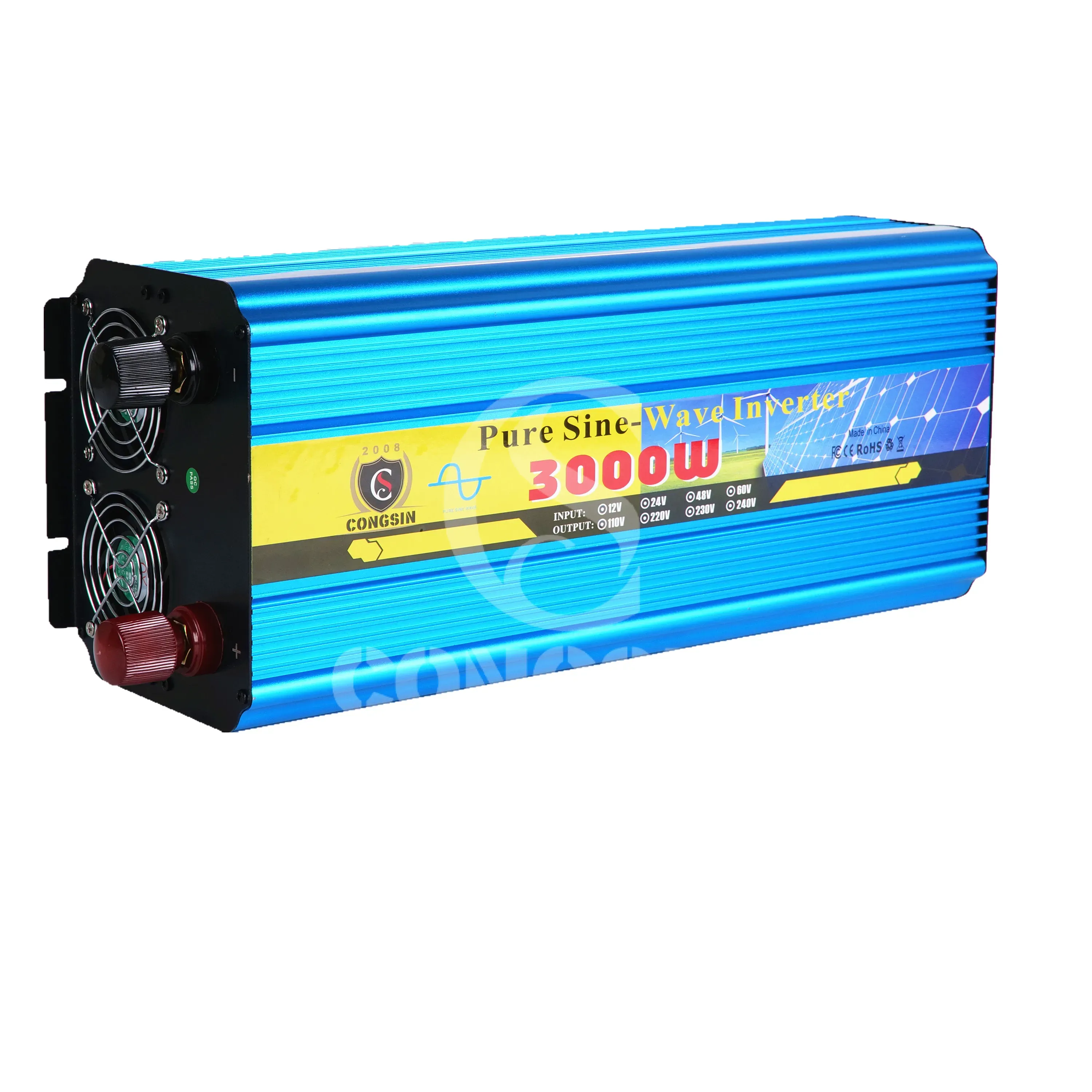
Congsin 3000W LCD Pure Sine Wave Inverter for Home Use Solar Backup Power Inverter Off Grid UPS
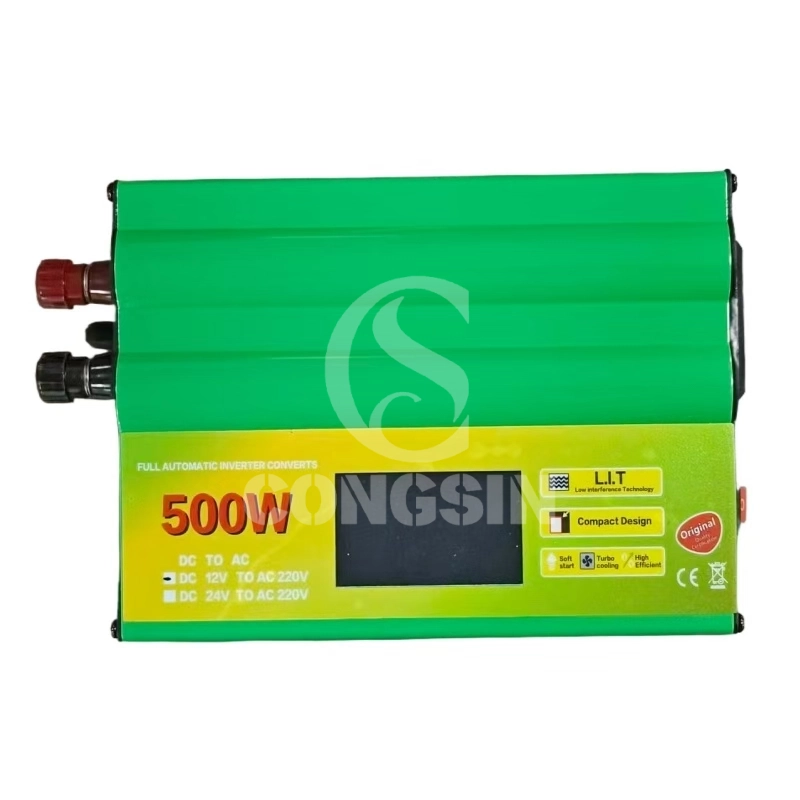
Congsin Modified Sine Wave Inverter 500W 1000W 1500W 12V LED Display Portable for RV Car Solar
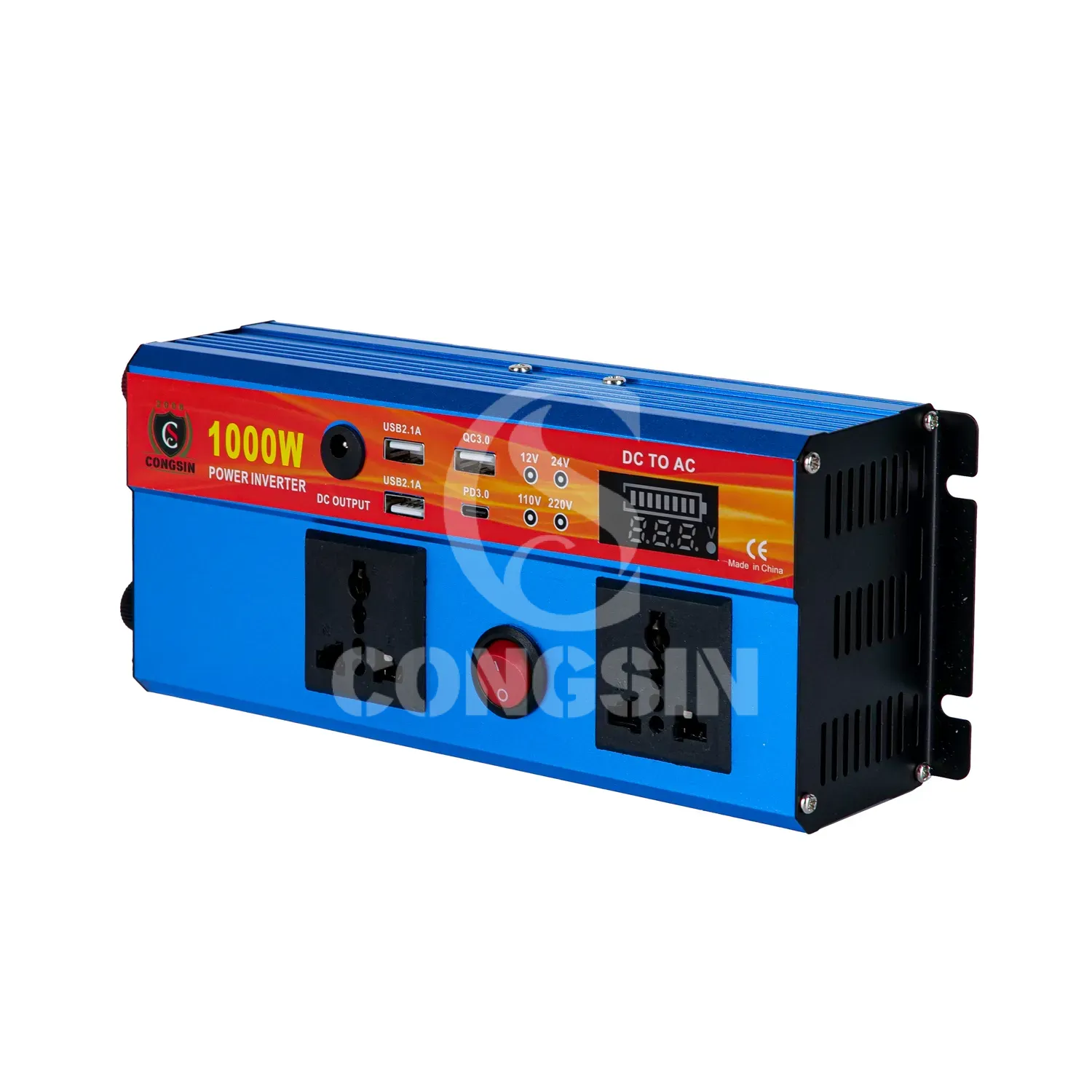
Congsin 1000W modified sine wave inverter with LED display and Type C port car RV power inverter
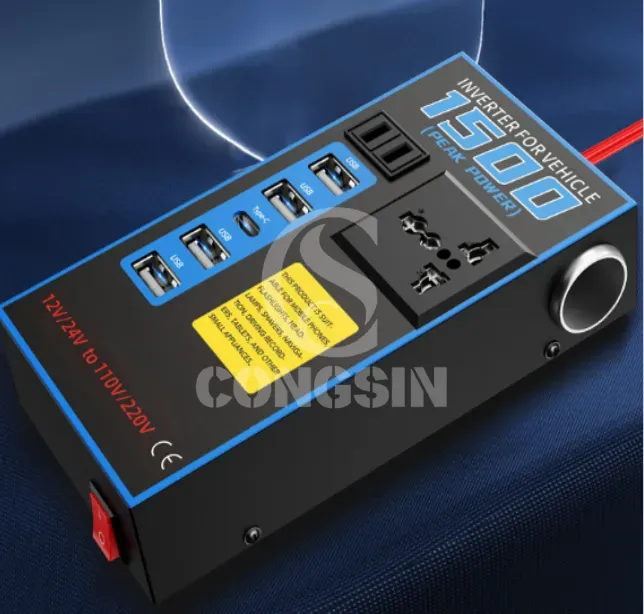
Congsin 1500W Inverter for Vehicle DC 12V/24V to AC 110V/220V with Universal socket Modified Sine Wave

CONGSIN is a trusted OEM factory for power inverters, solar charge controllers, and DC converters. Reliable solutions for global B2B buyers.
 High Quality
 7/24 Service
 Guaranteed Warranty
© 2025 Congsin. All Rights Reserved.